BYAN Completed 3-Day Training on Disability Rights, Inclusion and Advocacy Based on CRPD and SDGs

Bardibas (Mahottari) & Simara (Bara) | Asoj 2083 (September 2026) | Blind Youth Association Nepal (BYAN)
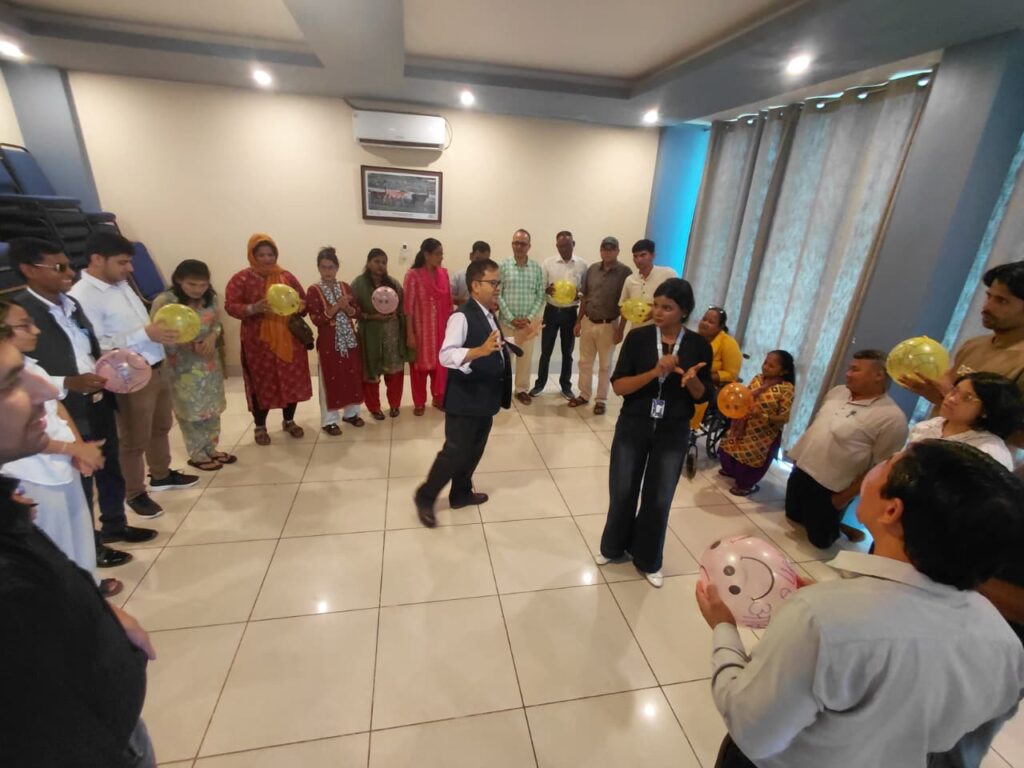
Bardibas / Simara — Blind Youth Association Nepal (BYAN) has completed a 3-day residential training on “Disability Rights, Inclusion and Advocacy” under the YATRA project, implemented by BYAN with support from CBM Global. Based on the UN Convention on the Rights of Persons with Disabilities (CRPD) and the Sustainable Development Goals (SDGs), it built the capacity of young leaders from Organizations of Persons with Disabilities (OPDs) to raise issues with local governments using evidence.
| Cluster | Districts | Dates | Venue |
| 1 | Mahottari, Dhanusha, Sarlahi | Asoj 9–11, 2083 (25–27 Sept 2026) | Gautam Hotel, Lalgadh, Dhanusha |
| 2 | Bara, Chitwan, Rautahat | Asoj 12–14, 2083 (28–30 Sept 2026) | Hotel Shreshtha Residency, Simara, Bara |
Participants were local youth representing OPDs. Each organization nominated two representatives (one woman, one man), with priority for youth board members. BYAN covered food, lodging and local transport, and a Training Needs Assessment (TNA) form was collected beforehand to shape the sessions.
What the training covered
- CRPD basics: adoption in 2006, Nepal’s ratification, the 50 articles and eight principles, and the Committee’s 2018 recommendations to Nepal. The CRPD creates no new rights; it requires states to remove barriers to existing ones.
- Articles 1 and 2: key terms such as reasonable accommodation and universal design, taught through a “Card A – Card B” matching game.
- SDGs and disability: the 17 goals and “Leave No One Behind,” with focus on Goals 4, 8, 9, 10 and 11.
- CRPD–SDG linkage: 18 CRPD articles mapped to SDG targets, and what local governments should do.
- Rights checklist: a 20-point self-assessment of the local human rights situation.
- Case studies: five examples of OPDs using surveys and budget analysis to win ramps, accessible school toilets, health post services, simpler ID card processes and budget lines.
- Advocacy skills: six areas of specialized knowledge and a 9-step formula (problem, evidence, right, SDG, power, message, demand, negotiation, result).